

The world of laser cutting offers a variety of advanced technologies that allow businesses to work more efficiently and accurately. But with all the choices available, it can be difficult to decide which system to choose. Laser cutting is the right one for your specific needs. In this article, we’ll compare two leading laser cutting technologies – fiber laser and CO2 – and provide comprehensive guidance on choosing the perfect solution for your business.
Understanding laser cutting technology
What is laser cutting?
Laser cutting is a process in which a highly focused laser beam is used to cut various materials, such as metals, plastics, wood, and more. The laser heats the material to the point of melting or vaporization, creating a precise and clean cut. This method offers many advantages, including high accuracy, speed of work, and resistance to abrasion.
Fiber Laser vs. CO2: An Overview
Fiber laser and CO2 are two laser technologies Leading to cutting Materials. Fiber lasers use special glass fibers to produce a powerful laser beam, while CO2 lasers produce a laser beam using a mixture of gases. Each of these technologies offers its own advantages and disadvantages, and the choice between them depends on the specific needs of the business.
Fiber Laser: The Innovative Cutting Solution
How do fiber lasers work?
Fiber lasers produce a laser beam using special glass fibers containing argon ions. When the glass fibers are illuminated by laser diodes, they produce a powerful laser beam with a very high energy density. This beam can cut through very thick metals with ease and precision.

Advantages of fiber lasers
High efficiency and low operating costs
Fiber lasers are very energy efficient, leading to significant savings in operating costs. They also require less maintenance and repairs than other laser technologies.
Compact and maintenance-friendly design
מערכות פייבר לייזר הן קטנות יותר וקלות יותר לתחזוקה בהשוואה למערכות לייזר מסורתיות. הן תופסות פחות שטח ויכולות להיות ממוקמות בקרבת עמדות העבודה.
Flexibility in cutting materials
Fiber lasers can cut a wide range of metals, including mild steel, stainless steel, aluminum, and more. They are also suitable for cutting certain non-metallic materials, such as plastics and ceramics.
Limitations of Fiber Lasers
Despite the many advantages of fiber lasers, they are still limited in cutting certain non-metallic materials, such as wood and fabric. They may also be less effective at cutting very thick metals compared to other laser technologies.
CO2 laser: the old and proven tool
Understanding CO2 Laser Technology
CO2 lasers produce a laser beam using a mixture of gases, primarily carbon dioxide (CO2), helium, and nitrogen. When the gases are illuminated by an electrical discharge, they produce a laser beam with a unique wavelength that is particularly suitable for cutting non-metallic materials.
Advantages of CO2 lasers
Outstanding cutting quality for non-metallic materials
CO2 lasers are known for their high cutting quality for non-metallic materials, such as wood, fabric, plastic, and more. They provide clean, smooth cuts, without scratches or defects.
Wide range of material compatibility
In addition to non-metallic materials, CO2 lasers can also cut a wide range of metals, including mild steel, stainless steel, and aluminum.
Proven reliability and durability
CO2 lasers are a proven technology that has been in industrial use for decades. They are known for their reliability and long-lasting durability.
Disadvantages of CO2 lasers
Higher operating costs
CO2 lasers consume more energy and require more maintenance compared to fiber lasers, leading to higher operating costs.
Larger footprint and high maintenance requirements
CO2 laser systems are larger and take up more space. They also require more frequent maintenance and routine repairs.
Choosing the right laser cutting solution
Material considerations
Metals: When to choose a fiber laser?
If your business primarily deals with cutting metals, such as mild steel, stainless steel, or aluminum, fiber lasers are the recommended choice. Fiber lasers offer high efficiency, low operating costs, and great flexibility in cutting a wide range of metals.
Non-metallic materials: the strengths of CO2 lasers
On the other hand, if your business focuses on cutting non-metallic materials such as wood, fabric or plastic, a CO2 laser is the preferred solution. CO2 lasers offer high cutting quality for these materials, with clean and smooth cuts.
Considerations by application and industry
Automotive and aviation industries
In the automotive and aerospace industries, fiber lasers are considered the preferred solution due to their ability to cut metals with high precision and speed. They enable the efficient production of complex metal components and items.
Production and industry
In manufacturing and industrial applications, the choice between a fiber laser and a CO2 laser depends on the variety of materials to be cut. If the majority of the materials are metals, a fiber laser is the best choice. If non-metallic materials need to be cut, a CO2 laser may be the more appropriate solution.
Signage and engraving
For signage and engraving applications on non-metallic materials such as wood, plastic or acrylic, a CO2 laser is the preferred solution. It allows for high-resolution cutting and smooth, high-quality results.
Cost and efficiency analysis
Initial investment and operating expenses
While CO2 lasers may be more expensive in the initial investment, fiber lasers consume less energy and require less maintenance, leading to significant savings in long-term operating costs.
Energy consumption and environmental impact
Fiber lasers are more environmentally friendly due to their low energy consumption. CO2 lasers, on the other hand, consume more energy and leave a larger carbon footprint.
Space and facility requirements
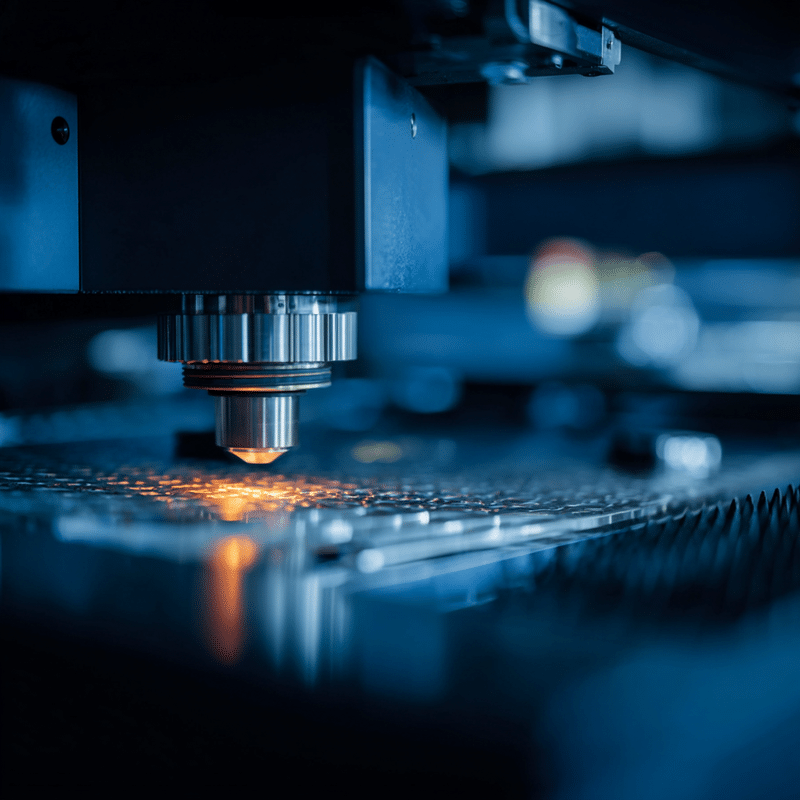
Laser space and footprint limitations
Fiber lasers are more compact and take up less space, making them an ideal choice for smaller factories or workshops. CO2 lasers, on the other hand, require more space due to their larger size.
Ventilation and safety considerations
Both types of lasers require proper ventilation systems to remove smoke and fumes. However, CO2 lasers may require more stringent safety and ventilation requirements due to the toxic gases used in the laser process.
Hybrid cutting solutions
While fiber lasers and CO2 lasers offer unique advantages, there is also the option of combining these two technologies together in a hybrid cutting solution. These solutions combine a fiber laser and a CO2 laser in the same device, allowing for tremendous flexibility in cutting a wide range of materials.
Combining fiber laser and CO2 technologies
In hybrid cutting systems, the fiber laser Used for cutting metals efficiently and accurately, while the CO2 laser specializes in cutting non-metallic materials such as wood, plastic and fabric. This combination allows factories and workshops to handle a wide range of cutting requirements using a single device.
Advantages of hybrid cutting systems
Increased flexibility and material range
Hybrid cutting solutions allow for tremendous flexibility in cutting a wide range of materials, from metals to non-metallic materials. This is an important feature for factories and manufacturers looking to improve their efficiency and expand their product range.
Optimal cutting performance
Hybrid cutting systems utilize the advantages of each laser technology for the appropriate materials, ensuring Optimal cutting performance and quality results for any type of material.
An efficient and cost-effective solution
By combining two laser technologies in one device, hybrid cutting systems offer an efficient and cost-effective solution. They save on initial investment and long-term operating costs, while maintaining flexibility and high performance.
Additional articles:

הכפוף הדיגיטלי: מדריך לתעשיית המתכת לכיפוף מדויק בלחצים הידראוליים


זיהוי הזמן להחליף כלי מכונת כיפוף: מדריך שלם לבלאי הכלים

חיתוך לייזר בשלמות: שליטה בחדות הקו